I want my Olympics 2.0-style

Last night, I went to bed watching girls’ gymnastics. I found myself very irritated. There were 24 girls in the finals, but NBC focused only on those that they thought would medal. The result is that there was tremendous downtime that the announcers filled with speculation, gossip, and historical reminiscing. I was quite irritated because what I wanted was to see more gymnastics. Anyone who is at the Olympics has to be fascinating to watch – why only focus on those who are likely to medal?

Come to think of it, everything about how NBC has covered the Olympics has been abysmal. Last weekend, I was with a hardcore copyright conservative who kept arguing that people watching the opening ceremonies online were cheating NBC out of money. I countered that what these people were doing was indicating what the market wanted. Many were happy to watch the Chinese CCTV version live instead of waiting until what NBC declared to be “primetime.” Personally, I was quite annoyed with NBC starting around 5.30AM when we woke up to watch the opening ceremonies only to learn that they weren’t covering it live. So, logically, we went to NBC’s homepage to see if they were streaming it live. No. That’s where I think that NBC fucked up royally. I don’t know why they decided that the Today Show was more important than the opening ceremony, but they did. Still, there was no reason to not stream it live on their website. I would’ve happily sat through dozens of commercials to see it live. Instead, I TiVoed it and watched it sans commercials. Big win on NBC’s part, right?

What NBC has tried to do is configure its viewers. They’ve told everyone how they should watch the Olympics and are peeved when people have a different idea of how they want to watch this symbol of nationalism. Normally, the people have no choice. Yet, because of the Internet, there’s a lot of push for alternatives. Of course, personally, I’m just angry and annoyed. I can think of so many ways that NBC could’ve handled this better. What I want is Olympics 2.0.

I want an Olympics where the “best” is broadcast on TV, like now. But I also want an interactive version. Take gymnastics. I want to know on each apparatus who is up live. And I want to be able to switch between different cameras and choose my own view through the stadium so that I can watch whichever competitor I want. I want to be able to watch live, all day, on ALL sports (even judo and the other weird ones where Americans are not so present). I want interactive live and I want to be able to pull down and follow any individual Olympian or team through their events at a later point. I want the Olympics to be treated as a bunch of spliceable objects that I can remix live for my own viewing pleasure. And I want to be able to see it ALL. Is that that hard to ask for? Hell, I’d be willing to pay for such interactive watching options. And I’d certainly be willing to watch ads to see things LIVE. But boy does it annoy me to watch a “live” NBC broadcast that is already well reported on in the NYTimes.

So can I please have Olympics 2.0? And dear International Olympic Committee, please don’t sell exclusive rights to the next Olympics to an organization who is doing more to curtail and configure access than to engage the market the way that they want to be engaged. And NBC, would you stop being so antiquated and leverage new media for what it’s good for?

health update

First, thanks to all of you who’ve written nice things asking me about my health. Since I bitched here, I feel compelled to send an update too. The good news is that it’s relatively simple and I’m going to be fine. The bad news is that it’s going to take a little bit.

For those who don’t know the backstory, I fractured C2/C3 when I was 16 playing ultimate frisbee. I’ve had various problems over the years as a result, but it’s been a while so I was rather shocked to see old symptoms reappear. After finding a doctor who didn’t think I was crazy, we set about to test things and figure out what might be causing it. Blood work, CT scans, physical evaluation, etc. Everything with my blood work and CT scans came back clear. There are still old scars on my neck, but that’s nothing to worry about. Nothing new. But, here’s the funny part – my alignment has gone to shit in all sorts of funny ways.

My body’s alignment issues are funny because they’re the result of trying to exercise. ::groan:: So, I knew that the various injuries that I’ve acquired over the last few years in an attempt to get into shape – golfer’s elbow, strained shoulder, knee issues – were most likely caused by my attempts to compensate for my neck and wrists. Well, annoyingly, it seems as though my body has decided to additionally compensate for those injuries, further setting my body off kilter. The result? Dreadful alignment, pinched nerves, trapezius spasms, etc.

Doctor’s guess is that this, combined with dissertation stress and the allergies and cough I managed to develop in Beijing, set my body into especially high freak out mode. It was a matter of time and, well, time hit this summer. As in the past, the problems with my vision are stemming from trapezius spasms. Only this time it’s not due to too much exercise, but to improper exercise. Even working with a personal trainer wasn’t the best of ideas because my injuries are too complex for that to work out well so that probably made things worse. But it’s all fixable.

The good news is that no one is suggesting surgery or medicine. Instead, physical therapy. Directed, targeted, measured exercise with constant assessment. Get the body back into alignment without causing new injuries. Do exercises that don’t let me compensate in stupid ways. Very precise and careful development of muscles. No additional exercising “for fun.” The doc guesses it’ll be a few months until I feel right again, but that if I work with a therapist to put my body back into shape, I should feel ten bazillion times better shortly. If not, we reassess.

Personally, I’m relieved. This all makes sense and the “solution” is something that I can live with. Or at least try without reservations. The only downside is that this stupid sneezing is probably not going to go away so long as I live in environments with pollutants. Hrmfpt.

answers to bizarre questions

Some of the questions posed when I requested brain fodder were, shall we say…. odd. In fact, it felt a bit like an “About Me” quiz. So I couldn’t resist answering….

Alison Bechdel or Jorge Cham? Jorge Cham. It might be different if I ever left the house or could face thinking about my identity. There is no danah, only Zool. I mean dissertation. Besides, did you see today’s PhD Comic? Running low on excuses… like asking for brain fodder…

Why is belly-button lint always blue? Well, if you’re wearing black clothes, black is never true black… typically blue. And then you mix with other colors and voila. Try wearing only white clothes for a week. And read The Incredible World of Navel Fluff. Some people have far too much time to think about these things.

Are you Jewish? Not according to the Israeli Orthodox. But, really, what queer, feminist is? More seriously, my parents aren’t Jewish, but my partner is and we celebrate all of the Jewish holidays.

Sweet or Salty? It was always sweet until recently. I think I’m getting old. Or adjusting to living in a desert.

Where did zephoria come from? When I was in college, zephyr meant three things to me: 1) the west wind; 2) an IM client; 3) the puppy dog that I lived with. In other words, zephyr combined my geekiness, my love of nature and animals, my desire to go to California, and my communication-driven-ness. Euphoria was what zephyr made me think of. Thus, zephoria. Plus, I always liked words that started with ‘z’.

Favorite color? Silver, especially the silver that sparkles rainbows. Like the way that I imagine Edward’s skin to look when he walks into the sun in Twilight. Not quite diamond silver, but the metallic silver that you can only get in nature, not car paint or clothing.

Who killed edupunk? Mmm… fun David Lynch plots ensue….

delectable brain floss?

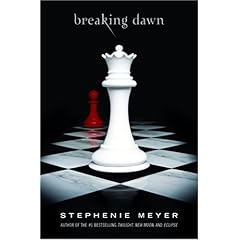
Last night, I took a break from dissertation writing and went to the bookstore. At midnight. I wasn’t alone. Dozens of teen and early-20s girls took their wrist bands and lined up to buy Breaking Dawn, the fourth and final book in the Twilight series by Stephanie Meyer. It was relatively calm, especially compared to the Harry Potter extravaganza that I witnessed in Harvard Square when Book 7 was released. Still, I was quite happy to see folks standing on line for a book. Go dork pride!

The Twilight series is what my friend Irina calls brain floss (a.k.a. brain candy). It’s the kind of yummy tasty book that makes you want to stay up all night and whip through it. All 700 pages of it. But that ruins its power as brain floss. Brain candy books must be used sparingly to be brain floss (or else you’d have to call it procrastination). So I’m only allowed to read 50 pages a day. Irina’s convinced that brain floss is necessary for dissertation reprieve. It gives your mind a break from the intense social theory reading that it must do while writing. The focus is on the storyline and character development. It’s easy to consume and takes absolutely no thinking whatsoever. Crunch crunch crunch… tasty.

Personally, I lurve YA brain floss. I mostly have little patience for the images of money, fame, power, and love presented in most adult brain floss. Of course, when I’m feeling the need to humor myself with Hollywood’s absurdity, I will sometimes grab a Jackie Collins. But that can’t be admitted to out loud so shhh.

I’m about to finish the Twilight series, so I have a question. What good brain floss do y’all recommend? Think the guilty pleasure book reading you do at the beach that is pure junk brain candy. Feel free to comment anonymously if you’re embarrassed. But bring on the trash!

knol: content w/out context, collaboration, capital, or coruscation

Isaac Newton famously stated, “If I have seen a little further it is by standing on the shoulders of Giants.” This metaphor is commonly used to highlight the way that knowledge is not a single-author process. We build on what others do, explicitly and implicitly. While folks generally understand this, our culture focuses on the contributions of individuals. In the world of publishing, there is often a single author on the cover and little is known about the large and small contributions of a whole team of folks – the editors, the grad students, the reviewers, etc. (I especially love books “by” politicians where the ghost writer is never acknowledged.) More problematically, when people are measured by what they can attribute to themselves as individuals, there is pressure to either avoid collaborating with others or to steal credit. Neither of these are healthy.

I’m a big fan of collaboration and collective knowledge production and public good projects. This is one of the reasons that I love Wikipedia. Not only are Wikipedia entries the product of collective contributions, but both the small and large contributions are visible to all. Of course, contributing to Wikipedia needs to be an act of love because there are no traditional structures that reward such contributions. Wikipedia has its faults, but it is fundamentally the collaborative creation of a public good.

Google’s Knol takes an entirely opposite approach to knowledge production. Knol’s entire structure is built around single authors, control and individualism. There aren’t even mechanisms for multiple authors and the tools available for collaboration are extremely limited. “Collaboration” still assumes a primary author. Linking between knols doesn’t appear common and so there’s no network of information. They key is authorship.

Since Knol launched in beta, folks have been comparing it to Wikipedia (although some argue against this comparison). Structurally, they’re different. They value different things and different content emerges because of this. But fundamentally, they’re both about making certain bodies of knowledge publicly accessible. They just see two different ways to get there – collaborative anarchy vs. controlled individualism. Because Knol came after Wikipedia, it appears to be a response to the criticisms that Wikipedia is too open to anonymous non-experts. The implication is that Wikipedia is the dribble of the unwashed masses. These same folks praise the control-centric Knol. Yet, I think Doc is right. A knol is quickly becoming a “unit of spam” instead of a unit of knowledge. Y’see – a system that is driven by individualism quickly becomes a tool for self-promoters. (And men…)

We’re quite a few months into the Knol experiment. What I find particularly fascinating is that most of the knols that they promote on their front page are health-related, primarily by people who claim to have health-related expertise (doctors, nurses, professors) who appear to be copying/pasting from other places. Why health? What’s motivating these people to contribute? (And why are they too lazy to fix the formatting when they copy/paste from elsewhere?)

Frankly, from my POV, Knol looks like an abysmal failure. There’s no life to the content. Already articles are being forgotten and left to rot, along with a lot of other web content. There’s no common format or standards and there’s a lot more crap than gems. The incentives are all wrong and what content is emerging is limited. The expert-centric elitism is intimidating to knowledgeable folks without letters after their names and there is little reason for those of us with letters to contribute. While I don’t believe in the wisdom of a crowd of idiots, I do believe that collective creations tend to result in much better content than that which is created by an individual hermit. (Case in point: my *$#! dissertation vs. any article I’ve co-authored.)

What makes me most annoyed about Knol though is that it feels a bit icky. Wikipedia is a non-profit focused on creating a public good. Google is a for-profit entity with a lot of power in controlling where on the web people go. Knol content is produced by volunteers who contribute content for free so that Google can make money directly from ads and indirectly from search traffic. In return for ?

When are we going to learn that the Internet is really good at collective action? When are we going to learn that getting people to develop and maintain bodies of knowledge on the Internet is an art? When the incentives are all wrong (e.g., Yahoo! Answers), the result is pure crap. When are we going to learn that experts alone never produce the best content? Hell, even a high school kid can improve most articles with some simple editing.

I don’t think that Wikipedia is the end-all, be-all, but I do think that they’ve learned a lot over the years. And I think that we need to take what they’ve learned seriously and improve on it. I do think that Wikipedia could benefit from the contributions of experts and I would love to see folks think about how such contributions could be incentivized and rewarded. That said, I don’t think that experts are enough. I think that they are only one part of the puzzle. I also think that Wikipedia is limited by its own scope. I’m glad that there are other projects under the Wikimedia Foundation, but I think that there need to be more and they need to be managed in context. For example, it’s pretty clear that we need a WikiHealth. Of course, I think that this area needs to be addressed cautiously.

There are huge costs to having inaccurate information available when it comes to health. It’s one thing to get the wrong diagnosis for your computer problem and accidentally destroy your machine. It’s an entirely different reality to get the wrong diagnosis for your health problems and brick your body. You can say that people shouldn’t take advice from the Internet, but be realistic. Our insurance/health system is so broken that most people can’t afford to go to the doctors… and besides, doctors are amazingly good at being wrong. So what’s the right structure for collective knowledge production around health? And no, Google, the answer is not people who self-report as doctors writing “definitive” entries about topics.

So, if I were to evaluate Knol, I’d give it a D. Maybe a C for effort, but points off for being so arrogant. Your thoughts?

Rebooting America

For those who haven’t seen it already, Rebooting America is out. Edited by Allison Fine, Micah Sifry, Andrew Rasiej and Josh Levy, this book contains a collection of essays from a bunch of super awesome folks, including Yochai Benkler, Susan Crawford, Esther Dyson, Newt Gingrich, Craig Newmark, Howard Rheingold, Doug Rushkoff, Clay Shirky, David Weinberger …. and moi. You can download the whole book here or buy it here. If you just want to read my essay, check it out:

Can Social Network Sites Enable Political Action?

This essay complements “Digital Handshakes in Networked Publics: Why Politicians Must Interact, Not Broadcast” from Ben Rigby’s Mobilizing Generations 2.0.

a penny for your brain fodder

My blog is boring these days. Most of my writing energy is being spent on my dissertation. And I promise, none of you want to hear details of how I fine-tune my methodology chapter. I can’t even keep you entertained with outrageous tales of sordid trysts because, well, there aren’t any. Hell, I barely leave the house. The most exciting moments in my life occur when my cat snarls at the neighbor cat who tries to steal her food. And, well, that minutia is better left for Twitter. I could blog the dreams I’ve been having that involve Marx and Engels yelling at each other, but those make me look psychotic. So I’d rather not. That pretty much leaves grocery lists, health rants, and detailed discussions of the variability in Los Angeles weather.

Part of the problem is that I’ve been pretty disengaged with everything but my dissertation. I don’t keep up with blogs or gossip and I have been dreadful at making it to events that would normally stimulate me to comment on events out in the world. Most likely, you’re more engaged with social media these days than I am. Or you’re here accidentally. And really bored. Presumably, if you keep coming back, you’re waiting for me to say something interesting. Or maybe you’re just sick and twisted.

So how about we make a deal… Why don’t you help me find fodder to ramble and I’ll try to be provocative in return? (Or at least more entertaining than I am now.)

If you’ve got something you want me to comment on, leave a comment. Write questions, share links, whatever. I can’t promise that I’ll get to everything nor can I promise that I’ll want to comment on everything, but at least that’ll give me a sense of what you might find interesting and it’ll give me something other than my dissertation to think about. Being a hermit makes it hard to determine what is interesting. Anyhow, let’s just give this a try… Perhaps it’ll be an abysmal failure but perhaps it’ll be an interesting experiment.

So what’s on YOUR mind these days?

medical update

First, thanks y’all for your advice and support. Today, I visited a different doctor and it was much much better. She was willing to parse out the different symptoms and offer hypotheses and ways to test these possibilities. She ordered full blood work and, with the advice of a spine/neuro brother team, a CAT scan. Plus, since we know the neck thing is an ongoing issue, she’s ordered PT to help me further stabilize my neck without creating new injuries. This is purrrfect since personal trainers, swimming, yoga, and pilates have all been abysmal failures.

There are still lots of question marks, but I’m much happier with how we’re proceeding. I feel like I’m being taken seriously and that she’s treating this like a puzzle to be solved systematically. And she’s not focusing on treating the symptoms but getting at what’s underneath them. w000t!

Anyhow, thanks for all of the love and support and hopefully I’ll know more soon.

Can the iPhone hit crucial network density for noticable cluster effects?

On Friday morning, I was shocked to find my always-empty neighborhood AT&T store host to a long line of iPhone cravers. What shocked me even more was that the diverse group didn’t look like typical Apple consumers. They sold out quickly and are still sold out. I remarked on this to the cab driver and he smiled and raised his Gen 1 iPhone, telling me that his cousin wanted him to borrow it for a few days to convince him to get one. His cousin thought it would completely change what it meant to be a cab driver in LA. Not only would it give real-time traffic info but it would let him know where his fellow cab friends were with ease. My driver was starting to agree with his cousin (who should definitely be earning commission for his iPhone sale).

I had never thought about the cab driver case. Cab drivers in my city are always so excited to see a familiar face on the road and they wave enthusiastically. Those who hang out at the airport have strong networks of fellow cab drivers who wait with them. While they’re always tethered to their company, the iPhone would let them connect to one another all day long. I could just see the joy in this driver’s face as he imagined when he’d be able to look at the screen and see all of his friends on the map buzzing around the city alongside dots telling him which surface streets to avoid.

I’ve been anxiously awaiting this launch in the hopes that it might show the power of cluster effects wrt mobile phones. Cluster effects describe the emergent practices that occur when the density of infrastructure adoption in a social network reaches a critical tipping point. In other words, cluster effects are the cool things that people do when all of their friends can do the same things. We take cluster effects for granted in the Internet space because, by and large, entire friend groups can jump onto a computer, grab a browser, and login to a website. In terms of clusters, the barriers to Facebook or MySpace are more personal than infrastructural. (Those who lack general access tend to have friends who lack access.) Mobile phones are different. Even if all of my friends have a Nokia N95, the likelihood that we’re all on the same carrier with the same plan is next to null. The result is that I can’t install an app onto my phone and expect all of my friends to be able to play along. This kills mobile social software from the getgo.

So far, there have been few examples of dense mobile adoption platforms. There’s the Crackberry, but that audience isn’t exactly the most innovatively social. The Sidekick was impressive amongst deaf communities and urban youth, but T-Mobile managed to lock that puppy down so heavily that no innovative practices really emerged. Still, if you look at the AIM usage in those clusters, you get a good indicator of the potential. And that’s all folks.

The iPhone has the best chance of hitting that tipping point of anything out there. For the most part, everyone is stuck on AT&T. And everyone gets a data plan. And the phone is semi-open. The price is still out of reach for most high schoolers who rely on parental pass-me-downs, but it has a decent chance of hitting other clusters. I was banking on urban 20-somethings, but I love the idea of it hitting cab driver clusters.

Right now, a phone is primarily a 1-1 communication device and, if you’re lucky, an information access device and a portal to the web. Interesting things can happen when the mobile is a platform itself. In other words, when you can assume that everyone around you has the same tool, you can start doing networked activities that don’t rely on a website. Cluster effects in mobile will be what happens when the LCD is not texting. From there, you can innovate. Sure, we’re going to see a plethora of mobile social network sites and mobile location friend services and mobile dating and mobile media sharing communities. The first wave will always be a translation of the web. But once you have cluster effects, you can also start innovating and finding new services and tools that allow people to connect in meaningful way. New games can emerge. New social services. Innovation in this space will be iterative – it will involve throwing things out to the market and seeing what consumers do and do not do. It will require iterating based on their practices and not trying to shove those curvy creatures into square holes. But there’s no point in leaving the starting block until cluster effects are underway because, sadly, iterating in imagination land inevitably leads to techno-utopian fantasies instead of meaningful applications.

Gosh do I want to see cluster effects triggered in mobile space. There’s such great potential for interesting things to take place. Sure, I’d rather see it take place on open platforms and open networks. And I am a bit worried that, without openness, we’re going to see some not-so-good side effects. I definitely share Zittrain’s fear of non-generative technologies. But part of me would rather fucked up market effects trigger cluster effects instead of governmental decrees. We all know that something has to break in mobile somewhere sometime soon. Our options are limited. Option 1: all carriers and handset makers need to start playing along. Option 2: some combination of handset/carrier triggers massive adoption. Option 3: municipal wifi emerges, allowing the web to serve as a temporary bridge. Option 4: governmental intervention demands platform infrastructure. These options all have downsides… Option 1 is a pipedream. Option 2 creates a monopoly risk. Option 3 will take a long time to unfold and still requires handset compatibility. Option 4 is more realistic in some countries than others.

Anyhow, there’s a decent chance that Apple & AT&T will screw this one up, but they have the best chance to hit Option 2 right now. And really, I’m bored. And I want a new phenomenon to study. And I want to see what happens when people can do weird and interesting mobile-based social stuff. I’m especially curious how this might affect mobile-centric populations, although that’s still a ways off. But yeah, possibility is in the air.

So…. AT&T, Apple, and Market Research Firms: I strongly encourage that you watch the network density of iPhone adoption. (Note: raw numbers don’t matter… you want density of adoption amongst pre-existing friend groups.) If there’s anything you can do to encourage network density, you won’t regret it. If you can tip full clusters to the same platform with all-you-can-eat plans, you can launch all sorts of interesting things that will fundamentally alter practice and change the mobile landscape. Please don’t screw it up.

seeking a productive relationship with medicine and the Internet

Ever since I left Beijing, I’ve felt like hell. A myriad of odd and seemingly disconnected symptoms have plagued me all month. My least favorite is the persistent cough that tastes like iron that makes me think I’m coughing up my lungs for realz. I find the sneezing to be mostly entertaining, although 14+ sessions a day of 3+ sneezes each has gotten a little overwhelming, even if said sneezes are awfully cute. Most of the others are just odd. None of them are worrying, except in aggregate. I feel like my body is rebelling against its very existence. Unfortunately, the seriousness of the odd symptoms took a turn for the worse this weekend. The combination of dizziness, nausea, and loss of vision forced me to leave a geek campout that I had been looking forward to for quite some time. Luckily, good friends were there to worry about me and help me get back to LA.

The Internet is dangerous when you have a disparate set of odd symptoms. There’s good reason to believe that I have mono, rare allergies, and a wide array of different cancers. Needless to say, I don’t trust the Internet to diagnose me. So I set about trying to find a way to get a doctor to help me. For once, I have real health insurance. (Of course, that doesn’t help so much when you don’t have a primary care physician because getting an appointment is a bitch. And goddess knows that going to the ER in LA sounds like the worst idea possible.) I ended up going to a university clinic where the doctor listened to my symptoms, decided that I must have migraine auras, wrote me a prescription and whisked me out of there before I had time to process what was said. Not a single test, unless you count the reflex one. I paid an absurd price for the meds and then went home to read about them on the Internet.

What I found bothered me. Oddly, the list of symptoms for migraine auras pretty much matched up with the list of side effects for the medicine. What it supposedly treats are also what it might cause. While headaches are not a requirement for migraine auras, headache-free migraines are rare and usually involve a history of related migraines. I don’t have these problems. So I’m sitting here, reading about a diagnosis that doesn’t seem right and reading about a medicine that seems to cause more problems than it helps. Besides, the instructions indicate to take the medicine when I have a headache. And furthermore, what does this have to do with my iron-tasting cough?

While the Internet is not diagnosing me, it is making me call into question the supposed diagnosis and treatment. I feel both empowered and disempowered by this source of information. Or rather, what makes me feel disempowered is the lack of a way of integrating this information into a productive move towards wellness. If I take the meds, I’m subjecting my body to chemicals that seem unnecessary and irrelevant. If I don’t, I’ve just wasted a day and am back to square one in feeling shitty with no path forward. Part of me wants to call the doctor, but I didn’t like the dynamic in our meeting so I can’t imagine a phone one where I come bearing Internet information. Instead, I will see another doctor.

All of this makes me wonder… isn’t there a better way to integrate information and medicine in a productive manner? I mean, I’ve read Birth of the Clinic and I know all about the power relations involved in medicine, but can’t we undo that somehow? I know that the doctors don’t know everything but I hate being treated like an idiot in the clinic and feeling like a criminal when I investigate my diagnosis/treatment and, implicitly, call into question the authority and power of the doctor. All I want is to be healthy and to know why my body feels like crap. What will it take to make medicine a collaborative endeavor? I’ve known some awesome doctors who are more collaborative over the years, but why can’t that be the norm? And why can’t there be a better way to match doctors and patients than geographic lookups on insurance websites? How can we get Yelp-like descriptions of doctors rather than the RateMyProfessor-esque ratings that do exist? What’s it going to take for the walls between patients and doctors to come down?

Yes, I’m ranting. I need something to do with this pent-up ickiness. Besides, ranting here also serves to explain why I’m dreadfully behind in responding to everything, especially anything that requires thinking. Sorry about that. My brain is moosh. I just hope that my angry body isn’t doing permanent damage on my mooshy brain.

PS: I can’t wait to be healthy and post-dissertation so my blog stops looking so lame.