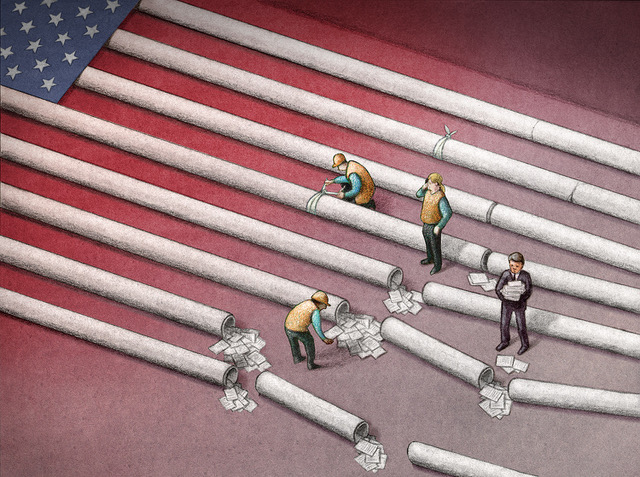
Wildfires are terrifying. They are especially gobsmackingly horrible when you add in hurricane-style winds. I will never forget the day of the Marshall Fire when my daughter stepped out of the car and literally blew down the street, forcing us to race after her and catch her. In those environments, it’s easy to see how a wildfire can spread so fast and furious. My heart continues to go out to all in Los Angeles who are still navigating the immediate aftermath of this. We in Boulder know that it’ll take a long time to recover – and that even after you rebuild your house, you will still shudder when the wind is strong.
As truly horrible and horrifying as wildfires are, there are people out there who make a big difference in putting a stop to them. These are the organized firefighters on the front line and in the air as well as the individuals who do the best that they can to prevent one structure from burning down. Their work is made possible through resources and community infrastructure, like access to water. But what makes them so inspiring is their will to put their bodies on the line to stop the spread of fire.
Most firefighters do not go at it alone. They work to ensure that they have accurate information so that they can make strategic choices about where to invest in building the fire line. They work as a team, constantly in communication as they divide the work and tackle the small issues to tackle the bigger one.
No firefighter wants to lose a structure, let alone a human life. But when they’re working, they’re focused first on containment. Cuz worse than losing a structure is allowing the fire to spread.
Even a the firefighters are still working a fire, emergency management services are kicking in to support those in need. While there are material needs upfront, many of the deep needs that are provided center on mental health. There is shock and trauma in every direction – especially for those who have lost their homes or loved ones. And unlike other kinds of trauma, this kind of trauma can’t be solved by just having someone find strength in their home because their home is gone.
Sometimes metaphors are helpful as anchors to ground us when we’re doing the work. As I speak to people trying to navigate the various dimensions of what’s unfolding all around us politically, I keep returning to the metaphor of a firefighter tackling a wildfire amidst 80mph winds. We need some people to focus on building the fire line. Others need to tend to those in trauma. Others need to ensure that the communication lines are open and clear. Others need to start investigating the causes of the fire to prevent future fires. And still others are out there working on saving that one house. All of this is important work. In short order, we’re also going to need those who can assess the damage, those who can see what environmental toxins were left behind, are those going to help rebuild.
As people start to come to terms with the shock-from-the-distance of seeing the wildfire play out on nightly TV, it’s now time to figure out which role in this fire do you want to play? If you are not yourself a firefighter, what support can you offer to those who are? How do you prepare to serve in the rebuilding process?
Democracy cannot and should never be taken for granted. It is a struggle. We must collectively work to achieve democracy, not expect it to happen to us. The fires are burning hot right now. The wind is often too fierce to send out firefighters in certain quarters. But that doesn’t mean we can’t prepare. And that doesn’t mean we can’t start imagining what rebuilding might look like.
After watching countless members of the public from across the political spectrum demean and dismiss mission-driven civil servants, I’m dreaming of a future where people understand and appreciate the administrative state and want to step in to help rebuild it. I’m dreaming of a future where our tryst with hate is recognized as the devil’s work. I’m dreaming of a future where we all recognize that we cannot address our global challenges through nationalism. What dreams are you hoping to manifest on the other side of this wildfire?
Many of us are aghast at the unprecedented dismantlement of the US administrative state. Mass terminations. Website erasure. Removal of watchdogs. Unchecked access to the treasury. All around me, people are trying to connect what’s happening to historical events. Is this fascism? A hostile corporate takeover? A coup? People want a frame both to understand what’s happening and grapple with what’s coming. Most of the people I know are also struggling to figure out where they can take action.
I’ve spent the bulk of my life tracking different dynamics in the tech industry. And, for the last decade, I’ve had the pleasure of working alongside federal civil servants and observing their commitment to American democracy. So as I watch this unfold, a few frames keep coming to mind. Frames that explain both the moment and how we got here. These are not frames that provide me with answers for the future, but perhaps they offer insights that others might be able to build on.
Jenga Politics.
Think about the wooden puzzle known as Jenga, where a tower is made out of criss-crossed wooden blocks. Players are asked to take out pieces of the wooden puzzle from the structure and then place their piece on top, increasing the pressure of gravity on the structure. The goal of the game is get your opponent to take the blame for making the entire system fall.
For years now, this has been my description of the administrative state as we’ve known it. Conservatives primarily take pieces out of the tower while liberals primarily add new blocks to the top. But all have a habit of removing blocks and adding pressures in certain circumstances. Meanwhile, both well-intended advocates and malfeasant ones mess with the blocks along the way.
The role of the civil servants play in the game of Jenga Politics has been to run around with duct tape in an exhausting effort to try to repair the tower before it all topples over. These “deep state” actors are viewed negatively by nearly everyone else by simply trying to keep the tower intact. In response, civil servants have been increasingly handicapped in what they can do to repair the tower. But like masochists, these mission-driven bureuacrats keep trying anyway – even as a range of well-intended and malfeasant actors attempt to make their work impossible. And, as with any system increasingly made of duct tape, their actions keep opening up new vulnerabilities into the system, new sites of potential exploitation. But that’s the point of this game. The mal-intended might not have designed the vulnerabilities, but they’ve studied the tower long enough that they know how to exploit them.
We’ve been playing Jenga Politics for a long time now. Austerity politics and outsourcing are mechanisms to take the blocks out. Administrative burdens and bureaucratic HR requirements have been new blocks placed on top. Meanwhile, lawsuits and weaponized FOIAs have been types of handicaps placed on civil servants – both by well-intended actors and those with ill intent. All have been collectively creating the conditions for a “normal accident,” where one wrong pull can topple the whole thing.
I’ve been anxious of this configuration for years now, but I always assumed that the wrecking ball move would not be so obvious. And yet, here we are. The civil servants aren’t just being handicapped – they’re being excised. Multiple forces are pulling out blocks as fast as they can, happy to watch the whole thing topple. And those who are accustomed to trying to “fix” things by putting pressure on top are at a complete loss of what to do.
My only hope at this point is that the blocks still exist when we get to the other side of this so that a new tower can be built. In reality, I’m concerned that we’re about to watch as kindling is brought in to ensure that the existing blocks are turned into ash.
Dismantlement, Reverse Hockey Stick Style.
The tech industry loves hockey sticks. Late stage capitalism is not simply about linear growth, but exponential growth. Faster, faster, faster. After all, financialized instruments depend on return-on-investment, not just profit. And so we’ve seen countless businesses drive towards sharper and sharper hockey sticks in pursuit of their unicorn dreams. Social media companies that want eyeballs obsess over hockey stick growth in views. Those that want to disrupt an existing business also seek exponential user growth, but they achieve this by purposefully forgoing their profits to capture the market before ratcheting up the costs once their competitors are dead.
For all of the attention paid to the growth curves in these systems, too little attention has been paid to the curves at the start of collapse. These too are often hockey sticks, but in the reverse. When MySpace came undone, the collapse was slow until it was explosive. The economic collapse tends to occur much later than the collapses of trust, interest, and user engagement. And many companies can milk out profit long after the collapse took place, usually by positioning themselves in a particular structural position or through a particular deal. Then they can live on with a much smaller userbase so as to have a long and slow death unless they innovate their way out. Think about Yahoo! or Firefox. They can also persist through lock-in, as grouchy users fail to leave the system because the cost to leaving is just too high.
The end can also be elongated through what we might call corruption. Twitter had been experiencing a long, slow decline for years before Elon Musk took over the company. His actions sped up the collapse, as though he was aiming for failure. As users and advertisers rushed out of the platform, Musk took to blaming everyone but himself. And then he started suing anyone he could think of. Now it appears that he’s gone one step further by making his platform the only place to ask questions and learn about certain kinds of government updates. No matter than he’s banned many journalists from using the site. This takes “lock-in” to the next level.
In the tech context, we see a lot of moves to avoid dismantlement. But tech logics long ago converged with the logics of one segment of the financial sector. The tech industry used to be afraid of the extractive logics of hedge funds and private equity. This is why people like Mark Zuckerberg have a controlling interest in their companies. Tech titans have learned the lessons of financiers and put them to use. Hedge funds and private equity aren’t interested in the underlying organization, innovations, customer bases, or value to society. They’re interested in extracting as much value as possible from a particular configuration. They say that they’re maximizing efficiency, but what they’re really doing is reverse hockey stick dismantlement.
This is Arson.
Both Democrats and Republicans have long loathed the administrative state. For almost a century, conservatives have been crystal clear that they want to reduce the size and scope of the federal government. Yet, liberals have also been caught up in a spiral of making government more “efficient” while labeling civil servants as lazy, stupid, or both. Lyndon Johnson brought in the economists. Bill Clinton outsourced. Barack Obama sprinkled elite do-gooders all across the federal government. Whenever it was their turn, Republicans pushed and squeezed civil servants into a corner. Both added administrative burdens, not just to achieve their policies but to make life worse for civil servants. No politician has truly appreciated civil servants in recent decades, even as those individuals wake up every day and try to keep the administrative state alive.
Given this, I shouldn’t be surprised that the Democrats are doing almost nothing to protect the civil servants as the heart of the administrative state right now. But I am none-the-less horrified by some of the rhetoric I hear in some quarters. One frame is particularly disturbing to me, especially on the heels of the nightmare in Los Angeles. I am stunned that anyone can argue that this is a healthy fire that will make way for new growth. This is not brush burning. This is arson.
The administrative state was in a precarious place after the first Trump Administration. As much as I love many people who went into the Biden Administration to “build back better,” I was repeatedly frustrated with friends who rejected my pleas to focus on improving the underlying infrastructure. Over and over, I was told that the Administration could not prioritize the administrative state because so much else was needed. Fixing the administrative state would need to wait. And then I was told that all was solved. There were executive orders and changes to OPM and OMB. I shook my head, unconvinced but also unable to convince anyone that the tower was toppling. As I was cut out of conversations, I knew that I had failed to be pursuasive. And so I just had to cross my fingers.
But here we are. The prioritized projects of the last Administration were easily dismantled. And the precarious structure of the administrative state is now even more on the brink. I was hoping that there would be enough resilience in the system to withstand the first tsunami. As I watched horrible cruel policies roll out, I watched as civil servants gritted their teeth and focused on protecting the systems they devoted their lives to ensuring could help the American people. And then the first true breech happened.
Amidst all of the news of all of the horrible actions of this Administration, it’s hard to explain the significance of political appointees accessing the Treasury’s systems and locking out civil servants. Systems like this are the protected jewels of the Jenga tower, the ones that civil servants obsess over protecting regardless of who is in power. They are like the key node in a social media network, after which the decline spirals out of whack. Many journalists recognized this, breaking the news at the top of their respective outlets. The Trump Administration also realized this, quickly announcing gobsmacking tariffs to shift the media’s attention. After all, the public is more interested in tariffs (and ICE) than esoteric technical systems that keep the government functioning. But the ashen look on the faces of civil servants I know said it all. It has been a hard two weeks for them, but, regardless of the legal dynamics, turning over access to the core systems at the heart of an administrative state to a wrecking ball is really really bad.
It’s All One Big Game.
Trump is all about spectacle. But all around him are gamers. And not just any gamers – gamers who are happy to destroy their opponents at any costs, regardless of the societal consequences. Gamers who see such destruction as a source of their power, rooted in their visions of masculinity. Gaming has long been entangled with masculinity, even before there were video games. Sports, gambling, and the stock market are all gaming practices known for expressions of masculinity. Gaming in the context of computing offered an alternative form of masculinity, one that was deeply empowering to so many geeks.
Bannon is an old skool gamer. And Musk never stops reminding us of his passion for gaming. But these guys aren’t just any gamers. They’re trolls who sharpened their claws during #GamerGate. Their version of gaming took on a toxic and abusive form long ago, one seeped in aggression and hate. The men’s rights movement wasn’t simply about allowing men to feel comfortable in their own identities; it was about justifying the oppression and abuse of anyone who dared to suggest that other lives might be valuable. It didn’t take long for a coalition to form around those invested in claiming power through oppression, justified by grievance. But within this ecosystem, the gamers are gonna game.
War, politics, and financial markets are often viewed as games that attract all sorts of problematic behavior. The very idea of a society is to create rules and guardrails, checks and balances. But gaming logic has always been about pushing those edges, exploiting the gaps, and finding the secret passageways. For decades, we’ve struggled to contain war mongers, corrupt politicians, and fraudulent scammers, although we’ve had mixed success. But this crew of gamers is playing a different game. And so we are going to need a whole new strategy for containing their destructive tendencies. In their minds, we’re the mob boss that must be defeated. We aren’t going to change this configuration by simply trying to give the mob boss more weapons. Instead, what’s our next move?
To make matters more complicated, there’s not just one game at play right now. Different actors in this melange are playing at different games. There are divergent ideas of what the “win” state is. And this has led people to be very confused about what’s happening. Is this about financial gain? Is this about power? Is this about a particular vision of the future? Or is this just downright fuckery because you can.
I don’t have answers.
Like everyone else, I’m stunned by everything I’m hearing. I don’t have a clear-eyed path forward. But I am trying to understand and frame what I’m seeing. And I relish others’ frames too.